Home >> News Events >> Events >> Training >> Ikwezi Lead Teacher Project, Phase 2b: Teacher Training for Metro East Education District, 2014

Ikwezi Lead Teacher Project, Phase 2b: Teacher Training for Metro East Education District, 2014


Saturday, July 19, 2014 - 08:30

Basic Concepts Programme offered as a UCT short course

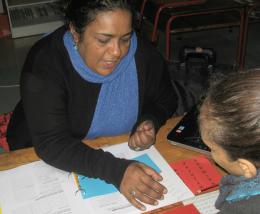
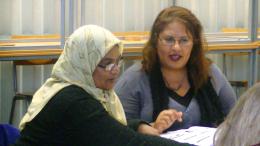
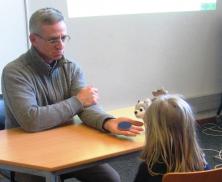
The training is for 32 Grade R and Grade 1 teachers from 7 schools in Metro East Education District, WCED. 

Dates: 17 May + 7 June + 19 July 2014

Venue: The Cape Teaching Institute (CTLI)

Times: 9h00-16h00

I found this course extremely helpful. One of the best I have attended. The programme makes so much sense and has really made me think!

Public Open Training, Cape Town (2014)

I understand how I can assist my learners who need intervention. The BCP will boost the self-esteem and knowledge of weak learners. It definitely helps me to guide my learners, using the correct language applicable to the situation.

Metro South Education District: Training (January, 2013)

Strategies to help teachers to support learners to think, as well as thinking about how thinking occurs and what the gaps might be.

Open Public Training, Cape Town (2013)
BCP Short Course, UCT (June 2013)

I feel very strongly that Basic Concepts should be introduced to all learners- this will give me the time to develop their conceptual language and increase their vocabulary and verbal fluency.

Metro Central Training: Western Cape Education Department (October, 2015)

The course was clear, open and easy to understand basic concepts. What I liked most was that it links with the curriculum and it really works. It needs to be implemented at my centre.

Open Public Training, Cape Town (June 2013)
BCP Short Course, UCT (June 2013)

‘It is an excellent programme. Just a pity that not all reception year educators are exposed to the training. My understanding of the programme- it is developed to systematically mediate concepts so that learners are guided to develop an understanding and so that learning is meaningful.’ (Metro Central, 2012)

Training Feedback